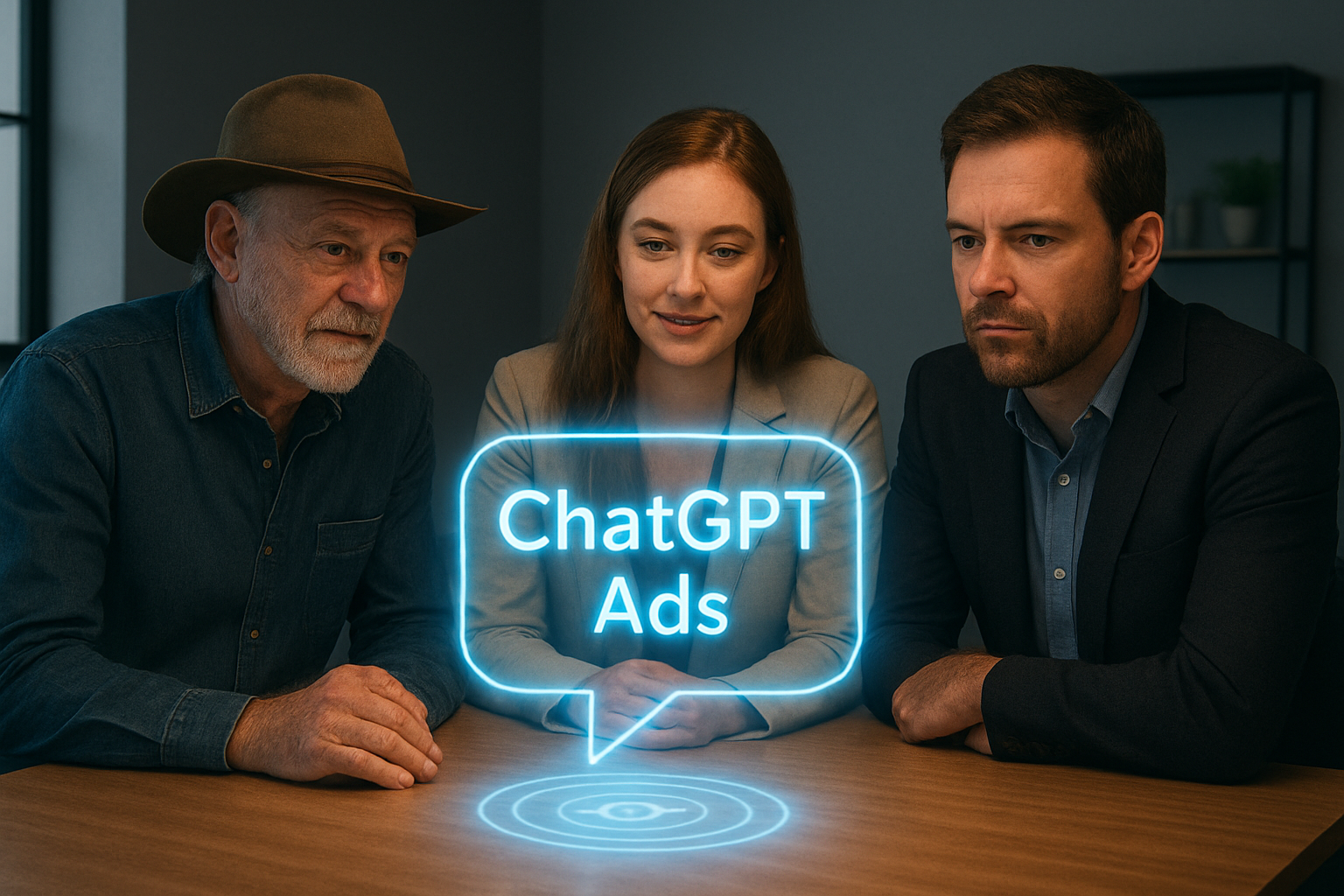
If
ChatGPT introduces advertising, it could reshape how people discover local businesses. Early research on conversational AI shows that more users ask assistants for help choosing restaurants, plumbers and other nearby services. Yet local owners remain unsure whether a new ad system would give them the visibility they struggle to earn on existing platforms. Many fear they will face the same disadvantages they see today: high costs, complex dashboards and competition from national brands. Others hope that conversational recommendations could shift power toward those who offer clearer information, not just bigger budgets.
Recent analysis of AI search behavior adds to this uncertainty. Studies indicate that conversational systems may already influence local decision-making, even without commercial placements. Users who once typed searches into a browser now ask AI tools direct questions about who to hire or where to shop.
Early evidence suggests that some of these interactions already point people toward local providers. If ads eventually accompany these answers, the impact could be immediate and significant.
The tension lies in what this emerging ecosystem might prioritize. Traditional digital advertising rewards those who master technical optimization. Conversational systems, however, may favor directness and usefulness. When an AI model responds to a prompt like “Who can fix my water heater today?” it must produce a concise, confident recommendation. Many analysts argue that this creates an opening for local operators who can articulate what they do in straightforward terms. Yet there is no guarantee that paid placements would follow this same logic.
Underlying challenges make the stakes higher. Discoverability has already shifted away from familiar web patterns. Instead of scanning through multiple search results, users increasingly wait for a single, synthesized answer. This change gives disproportionate weight to the model’s selection process, which analysts describe as part of a broader shift toward generative discovery. Businesses must
prepare for systems that extract and reorganize information rather than simply index it. In such an environment, clarity becomes a competitive advantage.
The potential introduction of ads adds another layer. Local owners want to know whether ChatGPT would charge reasonable rates, whether targeting would require specialized technical skills and whether large brands would dominate results. Without direction from OpenAI, speculation continues. Some commentators believe that intent-based conversational ads could reward businesses that anticipate the questions customers ask most. Advertising experts also propose that
smaller operators may benefit if the system highlights relevance rather than reach.
Even so, unresolved questions remain. Would AI-driven recommendations introduce new forms of bias? Would local businesses have to manage complex metadata to qualify for visibility? Would users trust sponsored placements inside conversational answers? The absence of a real ad system leaves these debates open and forces owners to prepare for a future they cannot fully see.
For many small businesses, adaptation has already begun. They rewrite their service descriptions to emphasize clarity. They organize their offerings into direct answers rather than promotional statements. They pay attention to how customers phrase questions and adjust their language accordingly. These steps reflect an understanding that conversational discovery is rising, with or without ads. They also acknowledge that early preparation may matter if advertising launches suddenly.
A future in which
ChatGPT recommends local businesses: whether through organic responses or paid placements, could redefine digital visibility. It may ease some burdens that small operators face, or it may replicate existing inequities. The outcome will depend on how the system values clarity, relevance and fairness. What is clear already is that businesses cannot rely on old assumptions. Discovery is changing, and visibility may soon depend on how well a business can be understood by the very tools that guide customers toward them.
If local businesses want a chance to stand out, they must prepare now: not for the ads that exist, but for the discovery systems that are coming.