Not long ago, when someone wanted to find a local service or product, the path was predictable. They opened Google, typed a query, scanned a list of links and ads, and clicked. Or they scrolled through social media, where sponsored posts blended into photos and videos from friends.
That pathway is starting to fracture.
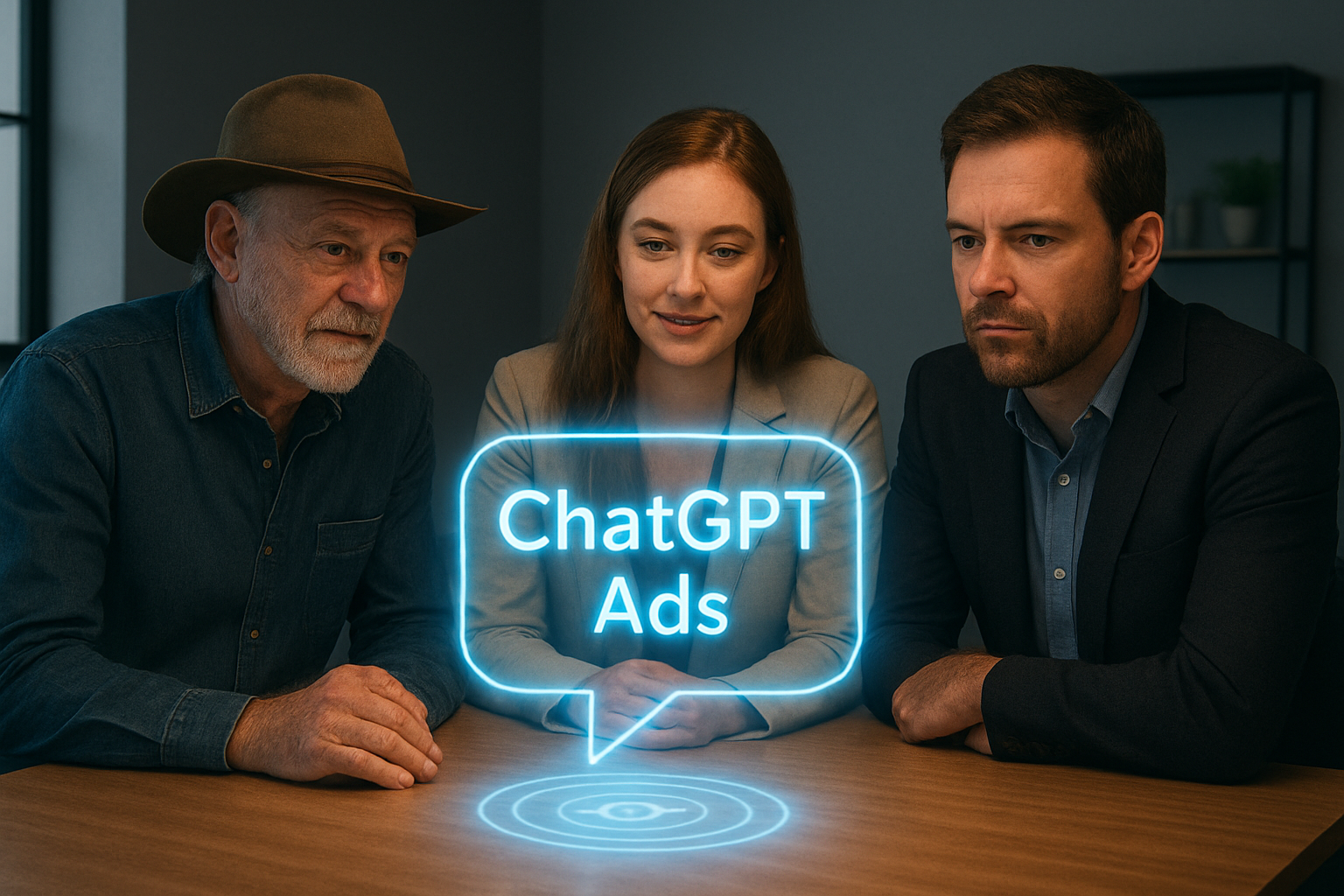
More consumers are turning to conversational A.I. tools like ChatGPT to ask what to buy, which service to choose, or how to compare options. Instead of ten blue links or a feed of posts, they get a single synthesised answer. For small businesses, that shift raises a quiet but consequential question: If ChatGPT becomes a gatekeeper for recommendations, will it also become a place where businesses must eventually pay to be seen?
From search results to answers
ChatGPT does not currently sell traditional ads in the way Google or Meta do. But OpenAI has publicly acknowledged that advertising is part of its long-term strategy, especially as it looks to expand access to the product beyond paid subscriptions. The company has said ads would be introduced carefully and clearly labelled, with an emphasis on maintaining user trust and
avoiding invasive targeting based on personal data.
That assurance matters because the experience ChatGPT offers is fundamentally different from search. When a user asks for recommendations, the system does not present options side by side. It makes choices on the user’s behalf: which brands to mention, which attributes matter, and which alternatives are left out.
For small businesses, that creates both anxiety and opportunity. Being named in a single authoritative answer could be far more valuable than ranking seventh on a search results page. Being excluded could mean invisibility.
The appeal and risk for small businesses
In theory, conversational A.I. advertising could favour smaller players. Instead of competing on who can spend the most on keywords, businesses might be surfaced based on relevance, proximity, or fit for a specific use case. For a local service provider, being recommended in response to a highly specific question could deliver more qualified leads than broad, untargeted ads.
But the risks are just as clear. Early reporting on OpenAI’s ad experiments suggests pricing could resemble premium inventory, with limited slots and
constrained measurement tools. For small businesses accustomed to granular dashboards, conversion tracking, and tight budget controls, a black-box system that offers little transparency may feel like a step backward.
There is also the issue of dependency. Many small companies already feel locked into advertising ecosystems they cannot afford to abandon. If ChatGPT becomes a primary decision-making tool for consumers, opting out may not be realistic — even if the costs rise or the rules change.
A precedent is already forming
ChatGPT is not the first A.I. answer engine to explore monetisation. Competitors have begun testing sponsored questions and clearly labelled paid placements embedded directly into conversational responses. These experiments show how ads can be woven into answers without looking like traditional banners or promoted links.
The lesson for small businesses is that advertising may no longer feel like advertising. Instead, it may resemble a recommendation: a subtle but powerful shift that blurs the line between neutral guidance and paid visibility. Regulators have already warned that such formats
require clear disclosure to avoid misleading users, especially when ads closely resemble organic content.
What this could mean going forward
For now, most small businesses are watching from the sidelines. ChatGPT referrals are anecdotal, and there is no ad-buying interface to learn or budget for. But the direction is hard to ignore.
If conversational A.I. becomes a primary interface for commerce-related questions, advertising may move upstream from search results and feeds into the answers themselves. That would force small businesses to rethink not just where they advertise, but how they describe themselves, structure their offerings, and signal trustworthiness to systems that summarise the world instead of listing it.
The unanswered question is whether this new layer will level the playing field or tilt it further toward those who can afford to pay for inclusion. For small businesses, the concern is not simply whether ChatGPT will become the next place to advertise but whether, one day, it will be a place they cannot afford not to.