Digital advertising, and in a much larger scope, Marketing, has always been a landscape filled with innovation, creativity, and evolution. From the first banner ads to the rise of search engines and social media feeds, the industry constantly adapts to new technologies. Now, we’re entering the next significant phase, one that’s powered by AI (artificial intelligence). AI isn’t just another tool for marketers; it’s quickly becoming a fundamental force that’s reshaping how brands understand, reach, and interact with their audiences.
AI’s influence extends far beyond simple automations that improve the quality of life of marketers. It’s enabling a level of personalisation, predictive insight, and conversational engagement that was once the subject of science fiction. From the algorithms that decide which ads you see to the chatbots that answer your questions, AI is becoming the new backbone of the digital advertising landscape.
Hyper Personalisation at Unprecedented Scale
For years, personalisation has been the holy grail of marketing. The goal is to deliver the right message to the right person at the right time. AI is making this possible at a scale previously unimaginable. Instead of relying on broad demographic segments, AI can analyse vast datasets in real time to understand individual user behaviour, preferences, and intent to better reach them.
Machine learning algorithms can track thousands of data points, from browsing history and purchase patterns to the time of day a user is most active. This allows for the dynamic creation of ad content tailored to a single individual. For example, e-commerce sites can use AI to show a specific customer a unique combination of products or services based on what they’ve viewed and what other similar users have purchased. The ad creative itself, including the headline, image, and call to action, can be optimised on the fly for a more personalised feel.
Predictive Analytics: From Reactive to Proactive Marketing
Traditional advertising is almost always reactive in nature. A business targets users based on habits or past actions, which usually involves the keywords they’ve searched for or their website visits. AI powered predictive analytics allows marketers to become proactive. By analysing historical data and identifying subtle patterns, AI models can predict future trends and customer behaviours with a pretty high degree of accuracy.
This has profound implications for campaign strategy and budget allocation. Predictive analytics can identify which customers are most likely to churn, allowing a brand to target them with a retention offer before they leave. It can also predict the lifetime value of a new customer, helping marketers decide how much to invest in acquiring new customers or retaining current ones. Instead of spreading their budget thin, businesses can focus their resources on the highest potential audiences, dramatically improving their ROI (return on investment).
Conversational AI: The New Frontier of Engagement
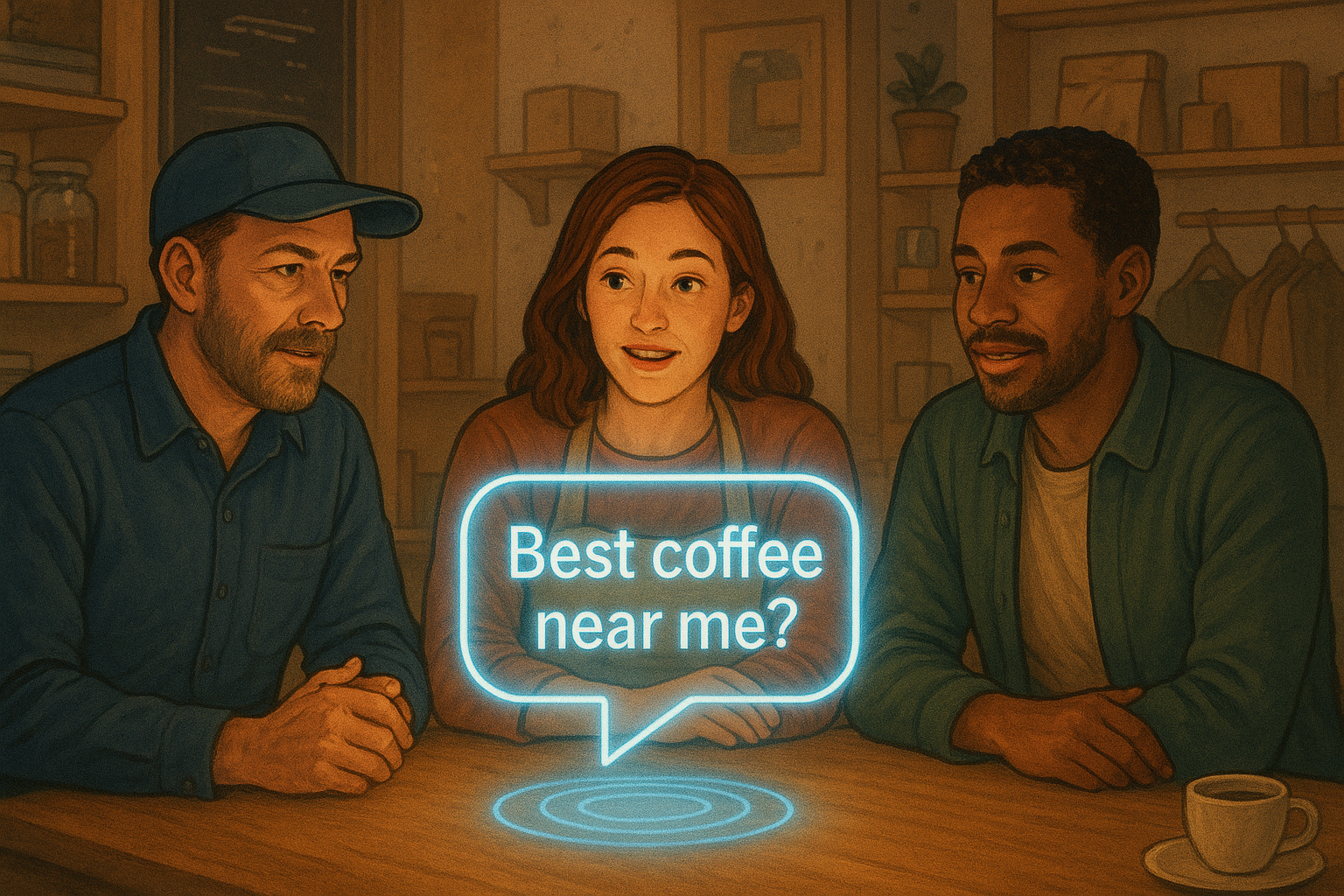
Perhaps the most visible transformation is happening at the point of interaction. The rise of more complex, conversational AI, such as ChatGPT, is creating an entirely new advertising channel. This marks the move from a one way broadcast to a two way conversation.
Instead of users seeing static ads, they can engage in a conversation with an “ad” through AI. They can ask questions, get personalised recommendations, and in the future, even complete transactions within a chat interface. This will be incredibly powerful as it taps into the psychology of human interaction and gets rid of friction points. A recommendation froma helpful AI assistant feels less like an ad and more like advice from a trusted source.
For businesses, this opens up a world of possibilities. Brands can sponsor responses that solve a user’s problem in real time and, in exchange, gain their business. Take, for example, a user asking AI for help planning a gluten free meal. They could get a sponsored suggestion for a specific brand of pasta, complete with a couple of recipe ideas. This form of native, conversational advertising is less intrusive and far more engaging than a simple banner ad that takes up screen space.
The Future of Ad Automation and Creative Development
AI is also automating many of the complex and time consuming tasks involved in creating and managing ad campaigns. This frees up human marketers, allowing them to focus on high level strategy and more creative tasks.
Many platforms are increasingly using AI to automate bidding strategies, audience targeting, and A/B testing. AI can run thousands of variations of an ad simultaneously to determine which combination of creative elements performs best, a task that would be humanly impossible without an extremely large team with an equally large budget.
Adding onto this, generative AI is beginning to play a role in the creative process itself. These tools can generate ad copy, suggest imagery, and even produce video content based on relatively simple text prompts. Having said this, human oversight remains crucial for brand alignment and strategic direction. AI is becoming a powerful copilot for creative teams. It can help overcome creative blocks and produce a high volume of assets for testing and personalisation, leading to more effective campaigns.
A New Era for Advertising
Artificial intelligence isn’t just enhancing digital advertising, it’s redefining the very foundations. It’s making marketing more “intelligent”, more personal, and more conversational than ever before. From predicting customer needs before they arise to providing helpful solutions within a natural conversation, AI is creating a more valuable experience for both consumers and brands.
The businesses that thrive in this new landscape will be those that embrace AI, not as a replacement for human ingenuity, but as a powerful partner. By using AI to automate complex, time consuming tasks, generate deep insights, and engage customers in meaningful conversations, marketers can build stronger relationships and drive better results. The future of advertising is here, and it’s being powered by artificial intelligence.